
3. “Corno da caccia” = “Corno da tirarsi”
I do not want to join the discussion about which baroque works should or can be performed by horn players and which by trumpet players; I would rather call on both sides to bring the baroque sound world to life. There simply is no single baroque horn on which all baroque horn parts can be played authentically. Rather, there was a broad palette of instrument types at the time, offering an interesting, seamless transition from the trumpet to the hunting horn with a large bell. On the introductory page Natural Horn Models you will find a list showing which Bach parts should probably be played on which kind of baroque horn.
My “Corno da caccia” version covers the brighter side of the sound palette.
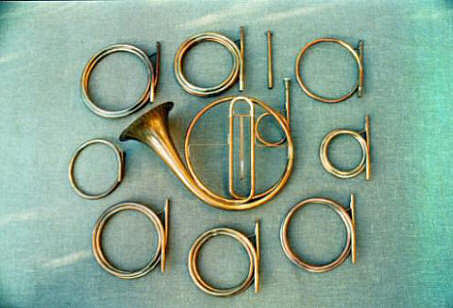
“Corno da caccia”, “Corno da tirarsi”, Engelbert Schmid
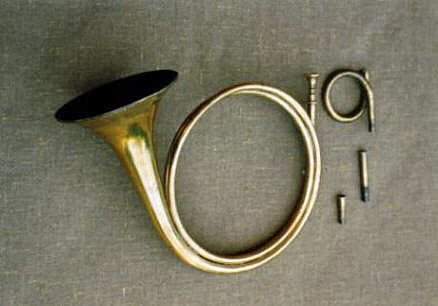
Original instrument, c. 1730, Friedrich Ehe in Nuremberg, in high D, with C crook and 2 tuning bits, from the Museum Carolino Augusteum, Salzburg
Description of my “Corno da caccia” version, also a “Corno da tirarsi”
- Use: Parts for “Corno da caccia”, “Corno da tirarsi”, “Lituus”.
- Keys: From high D to low C (at A = 415 Hz), crooks.
- Mouthpiece receiver: Normally for a horn mouthpiece shank. Adapting it to the shank of a trumpet mouthpiece is acoustically no problem. With a conical leadpipe tapering to a horn mouthpiece receiver, the instrument is very well in tune in all registers and keys. The cup depth must be adapted to the key, i.e. the shorter the instrument, the shallower the cup. Historically, a trumpet mouthpiece was the norm.
- Bell: Always hand-hammered, with garland, thin-walled, bell diameter 18.0 cm.
- Historical model: After Friedrich Ehe in Nuremberg, c. 1730, Museum Carolino Augusteum, Salzburg.
- Bore: Cylindrical section 10.6 mm, as in the original.
- Intonation: The tapers of bell and leadpipe have been refined by computer calculations for better intonation.
- Tuning slide in the middle: A superficial point of discussion. But there are clear, logical arguments in favour of this double tuning slide:
- Double slides already existed on baroque trombones.
- The “Tromba da tirarsi” and the “Corno da tirarsi” had a sliding leadpipe: the leadpipe was held with one hand while the other hand moved the entire rest of the instrument, in order to correct some harmonics and to reach notes in between. This sliding practice, however, was ergonomically about as bad as it gets.
- The lockable tuning slide common in the baroque era, on the leadpipe or between crook and body, also has ergonomic drawbacks, because it greatly changes the distance between the mouthpiece and the body.
- I assume that at the time nobody simply had the idea of placing a double tuning slide in the middle of the bell coil, and that this idea would have been gratefully taken up – as indeed happened a few decades later.
Acoustically and in sound it nevertheless remains a “Corno da caccia”. Using trombone slide grease, this tuning slide moves easily, so the intonation of the so-called impure harmonics as well as the required notes in between can be mastered without difficulty. The slide is twice 17.5 cm long, giving a pulling range of 30 cm. There are no finger holes, and no hand is used in the bell.
- Weight: 700 g with F crook.
Even without a hand in the bell, my “Corno da caccia” speaks very clearly in the high register.
<a id="Baroque-Corno-en"></a>4. Baroque “Corno”
Besides the brighter “Corno da caccia” and “Corno da tirarsi”, the baroque era knew several darker versions, namely the “Corno”, the “Corne du chasse” and the “Corne parforce”, with bell diameters of up to 30 cm. They had either fixed, narrow leadpipes or crooks which, however, were built too wide to be well in tune.
My baroque “Corno” covers the darker range of baroque horns. Some “Corno da caccia” parts may also have been intended for hunting horns with a narrow leadpipe. For example, the original “Corno da caccia” by F. Ehe responds miserably and is badly out of tune when it is lengthened cylindrically down to F, which is unavoidable with a trumpet mouthpiece shank. With a narrow, conical leadpipe, however, both my baroque horn versions have very good acoustic properties, even in the lower keys. Many are of the opinion that J. S. Bach’s Brandenburg Concerto No. 1 should be played on an instrument like my baroque “Corno”.
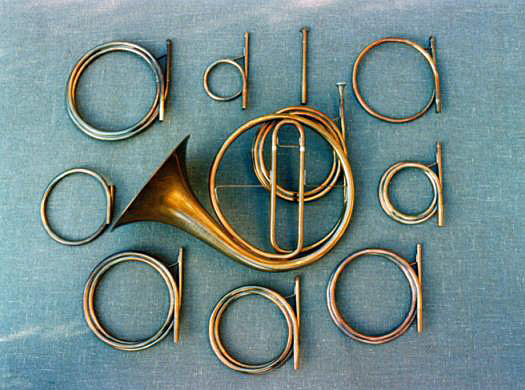
Baroque “Corno”, Engelbert Schmid
Description of my baroque “Corno” version
- Use: Parts for “Corno”, “Corne du chasse”, “Corne parforce”, also some “Corno da caccia” parts.
- Keys: High D to low C (at A = 415 Hz), same crooks as the “Corno da caccia”.
- Mouthpiece: Medium-shallow to shallow horn mouthpiece recommended. The cup depth should be adapted to the length of the instrument.
- Bell: Always hand-hammered, with garland, thin-walled, bell diameter 25 cm.
- Historical model: A synthesis of J. Fr. Schwabe in Leipzig, J. H. Eichentopf in Leipzig and J. Leichamschneider in Vienna; cylindrical section 10.6 mm.
- Tuning slide in the middle: The same arguments apply as for the “Corno da caccia”, but the slide has normal stiffness. We also offer a baroque Corno version without tuning slide.
- Intonation: The entire bore profile has been refined by computer calculations for better intonation.
- Intonation correction: No finger holes, as they are a very questionable solution: firstly, they are not historical; secondly, they would need a different position for every crook (from high D to low C!). Nor is it enough to correct only the two notes f'' and a'', because baroque parts also contain notes in between. A hand in the bell helps enormously with clear response and volume in the high register. Used carefully and combined with lipping, it gives a very balanced tone quality and flawless intonation.
- Weight: 850 g with F crook.
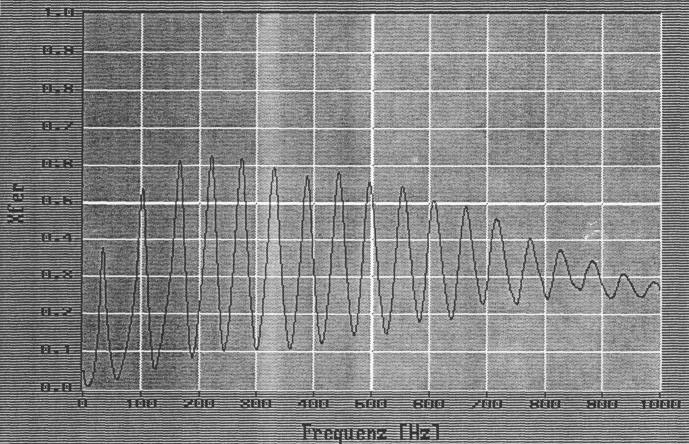
Resonance curve of the baroque “Corno” without hand
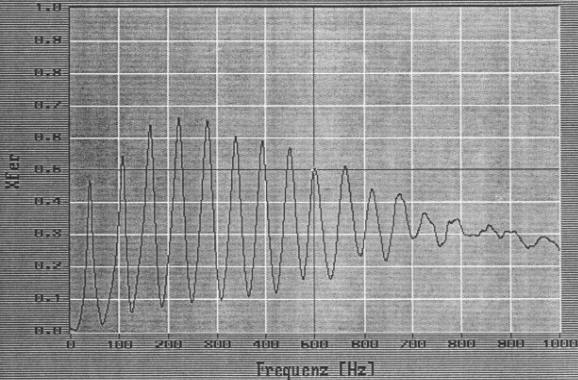
The flare of a horn-like bell is too gentle for the high register to speak clearly without a hand.
Resonance curve of the baroque “Corno” with hand
With a hand in the bell, the high register speaks very clearly.
<a id="Baroque-Corno-with"></a>5. Baroque Corno with tuning bits
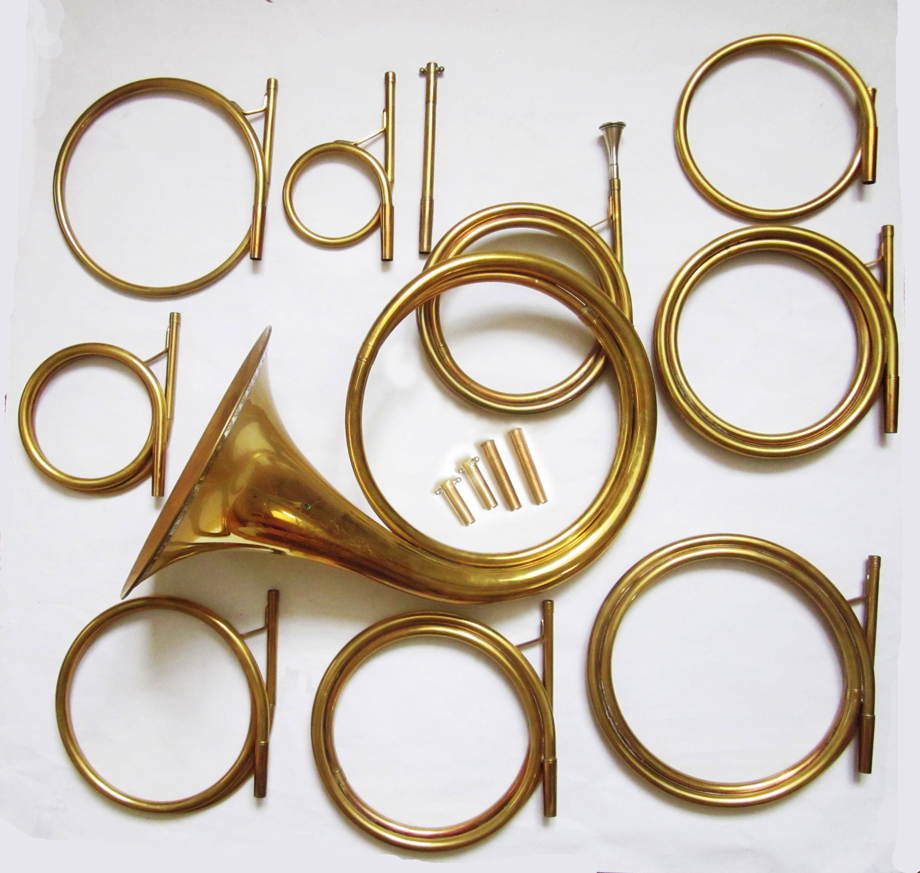
Baroque “Corno” without tuning slide
For visual reasons we also offer a baroque Corno without tuning slide, with the same bore and the same crooks. The pitch is adjusted with 4 tuning bits of different lengths. This changes the distance between the instrument and the player’s lips, which is not ideal ergonomically – but it looks more historical.
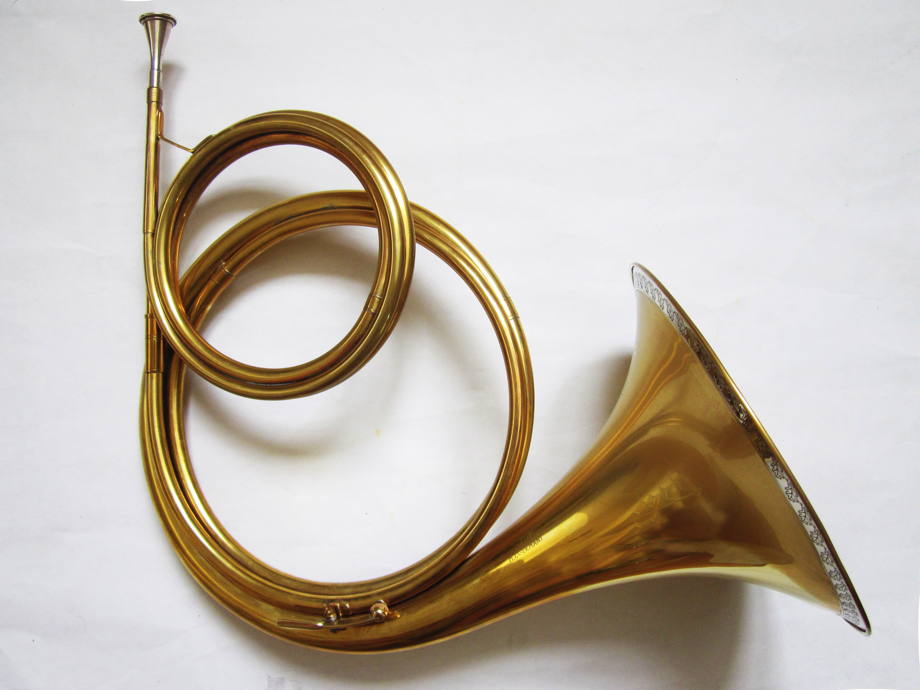
The water key hidden on the back has a second purpose: it is a C3 key! With the key open, the high C comes out absolutely securely. The photo shows the high C key for the instrument with the F crook. With a second water key, the high C of the D crook can also be “fixed”. Incidentally, opening this water key also produces a corrected F2! Of course, customers can also order the instrument without this C key.
<a id="Corno-Da-Caccia-en"></a>6. “Corno da caccia” – Gottfried Reiche
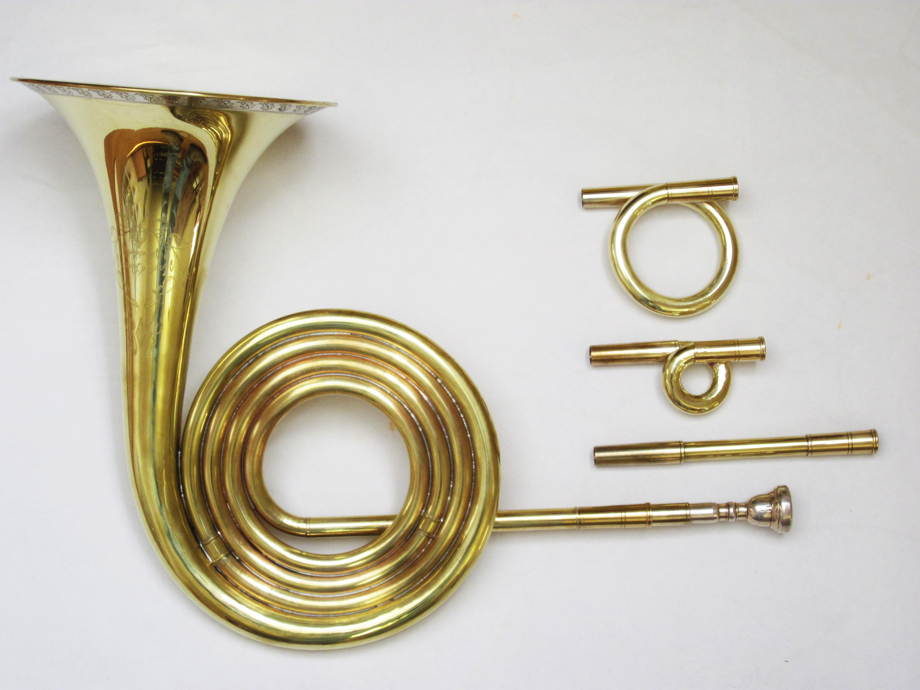
“Corno da caccia”, “Corno da tirarsi”, “Tromba da tirarsi” after the portrait of Gottfried Reiche
Visually a very beautiful instrument, modelled on the famous portrait of Gottfried Reiche. The notes between the harmonics are made possible by moving the whole instrument. The single tuning slide at the beginning of the horn requires the shank of a trumpet mouthpiece. With one hand you hold the mouthpiece receiver with the inner slide, with the other hand you move the horn.