
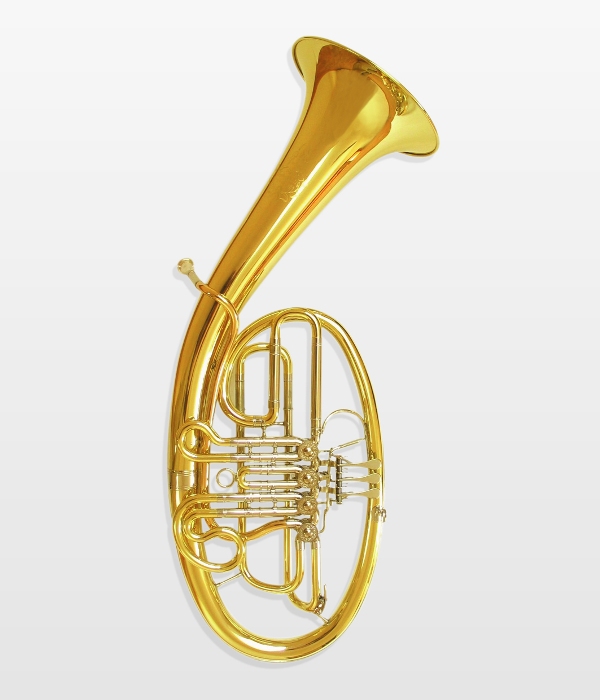
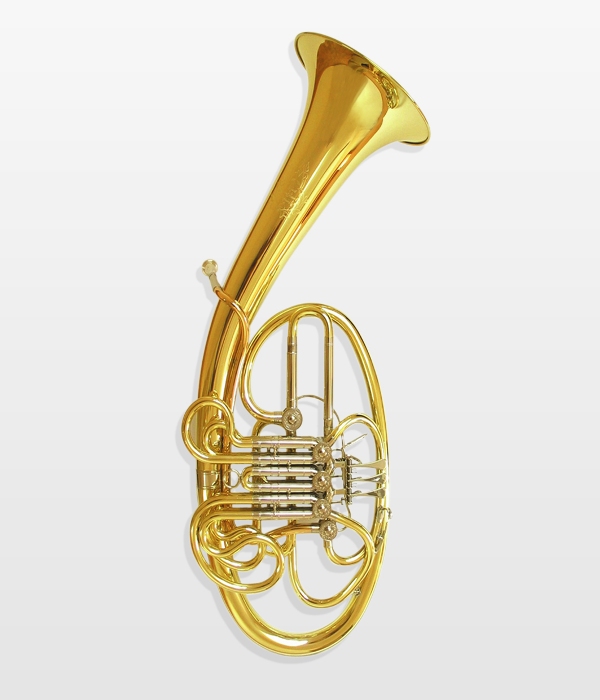
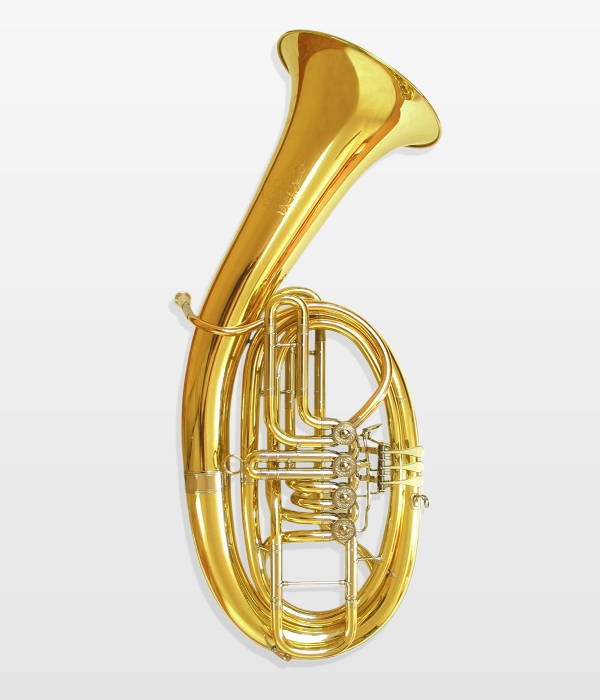
Engelbert Schmid Wagner tubas represent a revolutionary new development which puts an end to decades of compromises.
Intonation
They are in tune like a good horn.
Sound
They sound the way a Wagner tuba should sound: somewhat strange, mystical, not too round, not too much like a euphonium. A slightly deeper mouthpiece than for the horn suits many players better on the Wagner tuba.
Response
Clear and fast. There are no bad notes.
Playing feel
A Wagner tuba always needs more air than a horn, and the intonation is less stable in fortissimo. However, the difference from the horn is clearly reduced. The horn player feels comfortable immediately.
Valves
Facility and slurs are as good as on an Engelbert Schmid horn. These tubas are technically so agile that they will find their way into brass ensembles. Compared with the horn, the thicker sound of the Wagner tuba blends very well with these relatively loud ensembles and can reduce the dominance of the trumpets, which becomes shrill in the long run. A brass quintet could include a tuba trio, or the quintet could be enlarged to a sextet with a second horn player/Wagner tuba player.
Holding position
The left hand grasps the bell branch of the Wagner tuba, which has approximately the same diameter as a horn bell at the grip. Thumb lever and main levers are therefore in the same position as on a horn. The leadpipe is bent so that you don't have to stretch your head upwards. The whole instrument is ergonomically balanced, and you can see the conductor as well.
Bell direction and seating order
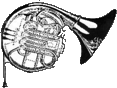
The resulting bell direction to the left has, all in all, considerably more advantages than disadvantages. In some cases, depending on the position or line-up on stage or in the pit, you might have to experiment a little in order to find a new, better seating order. The normal arrangement would be the following:
 |
|
 |
|
|---|---|---|---|
| Tuba 2 | Tuba 1 | Horn 1 | Horn 2 |
|
|
|
|
| Tuba 4 | Tuba 3 | Horn 3 | Horn 4 |
Horn 1 and Wagner tuba 1 can sit side by side without blowing at each other. The Wagner tuba quartet can hear the 1st Wagner tuba very well.
For pieces with 8 horns, in which horns 5 to 8 also play Wagner tuba, I propose the following seating order:
| Horn 1 | Horn 2 | Horn 3 | Horn 4 |
|---|---|---|---|
| Horn 8 (+ Tuba 4) | Horn 6 (+ Tuba 3) | Horn 7 (+ Tuba 2) | Horn 5 (+ Tuba 1) |